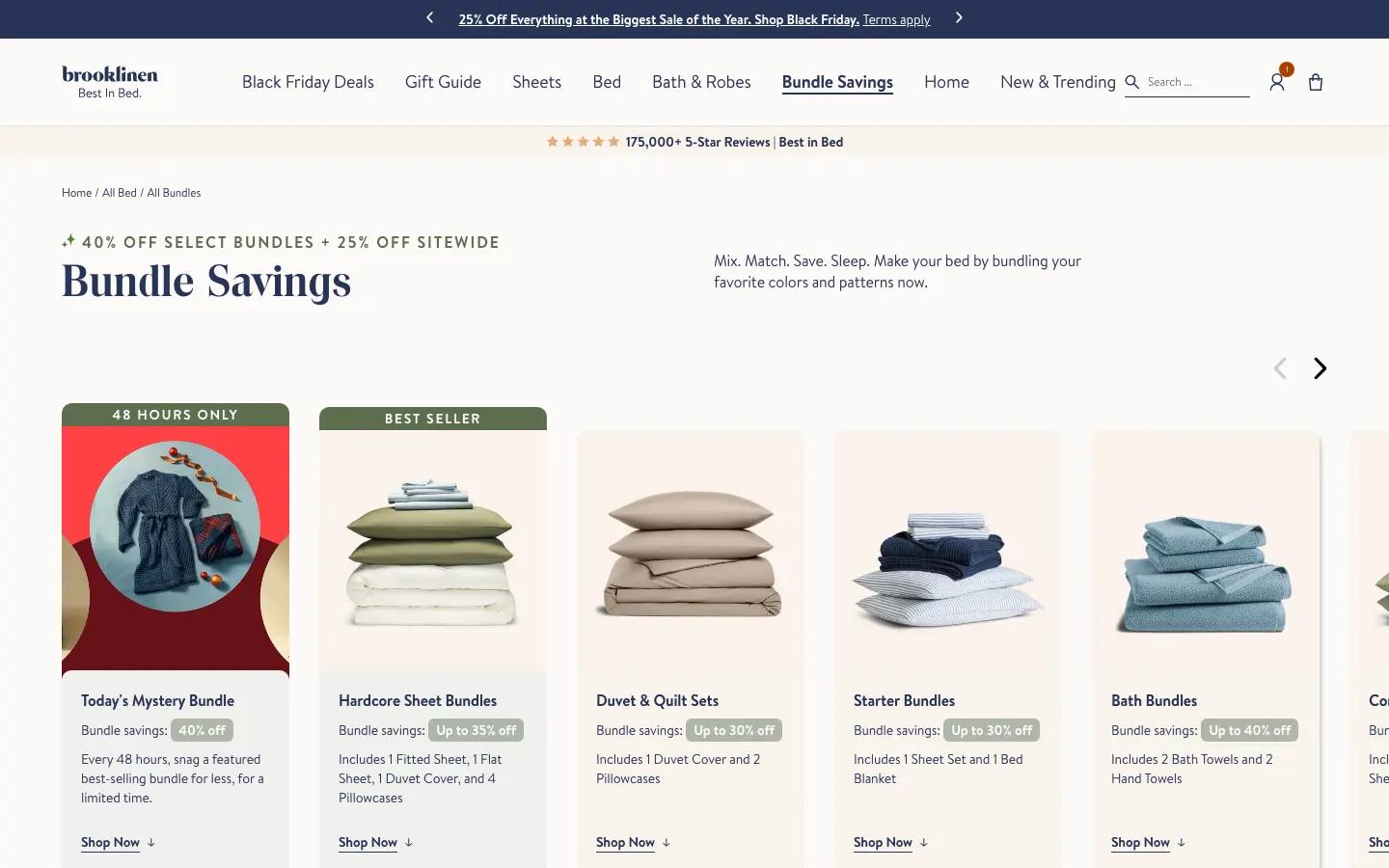
Product bundles: five types, how to price them, and who does it well
Fixed sets, multipacks, build-your-own packs, value sets and limited drops, with pricing rules and the apps that run them.
Average order value · 5 min read
A quiz funnel asks shoppers a few questions, then recommends products that fit their answers and captures their email along the way. Quizzes are worth building when choosing is hard: sizing, skin or hair type, or a large range. Keep it under ten questions and end on a clear recommendation with an add-to-cart button.
By The Growth Desk · Updated · 4 min read
Effort and impact are our estimates
| # | Tactic | Effort | Likely impact | Best for |
|---|---|---|---|---|
| 1 | Fit or size finder | Effort: Medium | Likely impact: High | Apparel, bras, shoes |
| 2 | Routine builder | Effort: High | Likely impact: High | Hair, skin, supplements |
| 3 | Product finder | Effort: Medium | Likely impact: Medium | Ranges over ~20 products |
| 4 | Gift finder | Effort: Low | Likely impact: Medium | Holiday season |
| 5 | Ad landing quiz | Effort: Medium | Likely impact: Medium | Cold paid social traffic |
A quiz funnel is a short set of questions that ends in a product recommendation. Along the way, it usually asks for an email address so the store can follow up.
It replaces browsing with a conversation. Instead of comparing forty shampoos, the shopper answers a few questions about their hair and gets one routine.
Quizzes take time to write, design and maintain. They pay off when a shopper genuinely can't choose without help.
If you sell five products that are easy to tell apart, skip the quiz. A clear comparison table or a bundle of your best sellers will do the job faster.
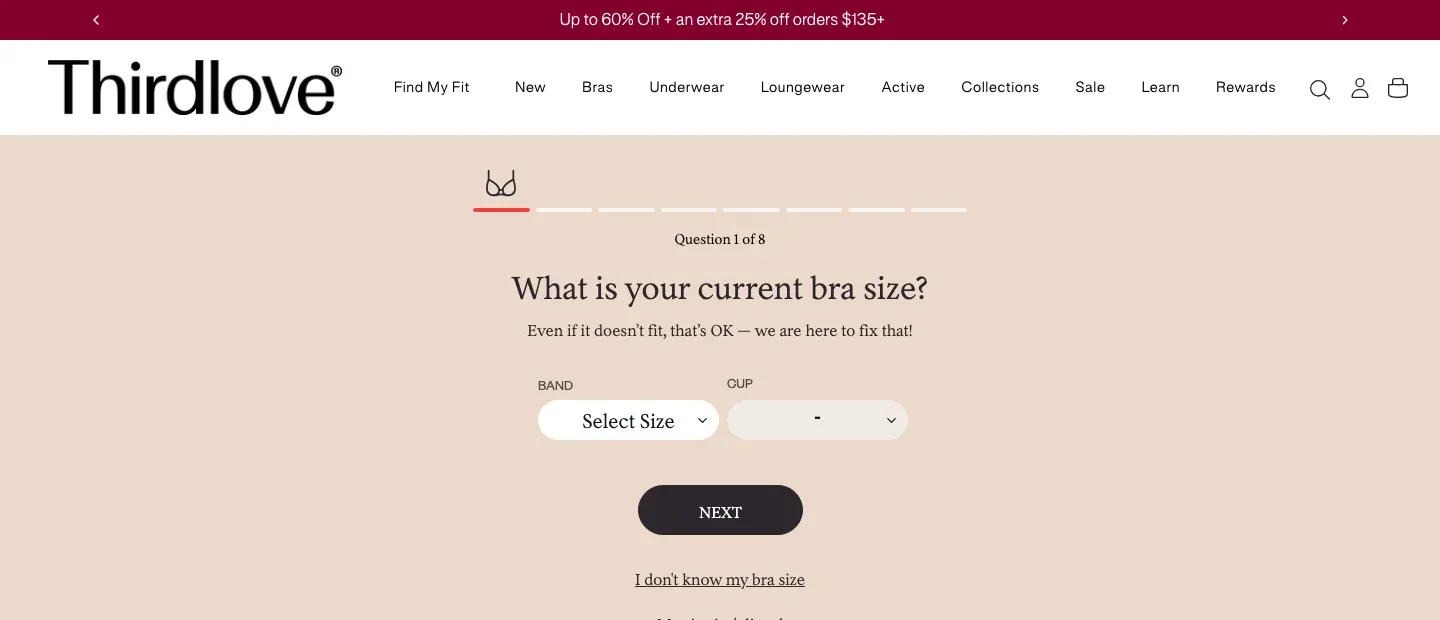
ThirdLove's fit quiz opens by asking for the shopper's current bra size, with a link for shoppers who don't know it. Every later question refines the fit.
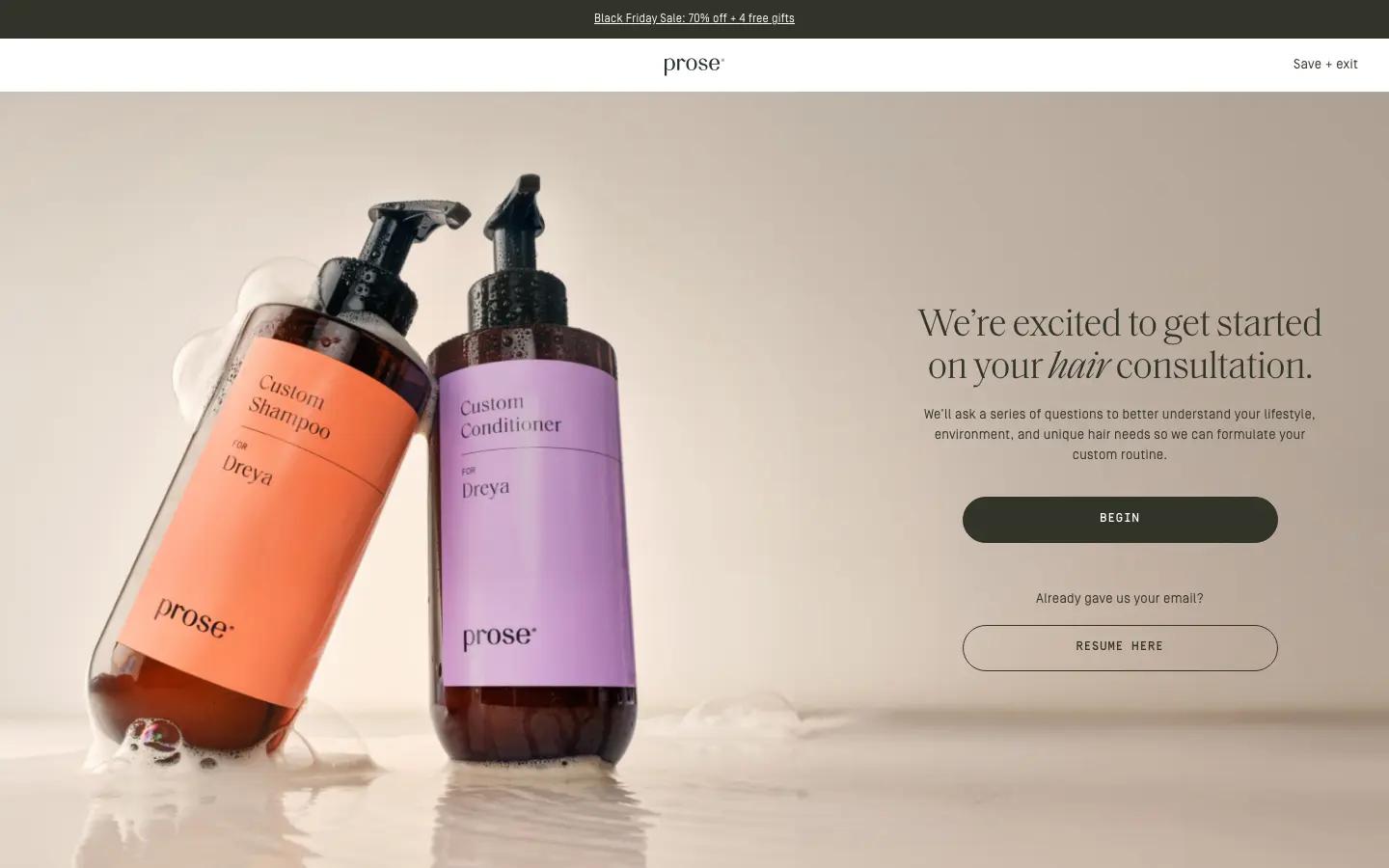
Prose's consultation says it will “ask a series of questions to better understand your lifestyle, environment, and unique hair needs so we can formulate your custom routine.” The result is a set of products, which also lifts average order value.
A finder narrows a big catalog to a few picks. Warby Parker's frames quiz is a well-known example. A gift finder does the same for buyers shopping for someone else, and is worth a seasonal slot before the holidays.
For cold traffic from social ads, a quiz can be a gentler first step than a product page. The shopper starts with a question about themselves, not a price.
Quiz apps mostly charge by the number of quiz starts or responses. Estimate your monthly quiz traffic before picking a plan.
Quiz app prices, captured November 19, 2026
List prices, USD| Tool | Plan | Price | What you get | Source |
|---|---|---|---|---|
| RevenueHunt | Free | $0 | Up to 100 quiz responses/mo | apps.shopify.com |
| RevenueHunt | Basic | $39/mo | Up to 500 responses; Klaviyo and Omnisend sync | apps.shopify.com |
| Octane AI | Basic | $50/mo | 400 quiz starts, up to 2 quizzes | octaneai.com |
| Octane AI | Plus | $200/mo | 2,200 quiz starts, unlimited quizzes, A/B tests | octaneai.com |
| Quiz Kit | Scale | $59/mo | Unlimited quizzes, A/B testing | apps.shopify.com |
| Replo | Free / Starter | $0 / $119/mo | Landing pages around the quiz | replo.app |
RevenueHunt · Free
$0Up to 100 quiz responses/mo
Pricing on apps.shopify.comRevenueHunt · Basic
$39/moUp to 500 responses; Klaviyo and Omnisend sync
Pricing on apps.shopify.comOctane AI · Basic
$50/mo400 quiz starts, up to 2 quizzes
Pricing on octaneai.comOctane AI · Plus
$200/mo2,200 quiz starts, unlimited quizzes, A/B tests
Pricing on octaneai.comQuiz Kit · Scale
$59/moUnlimited quizzes, A/B testing
Pricing on apps.shopify.comReplo · Free / Starter
$0 / $119/moLanding pages around the quiz
Pricing on replo.appOnce the quiz collects emails, connect it to your abandoned cart emails and welcome flow, so the answers keep paying off.
Five to eight is a sensible range. Ask only what changes the recommendation, and put the easiest question first.
They can when shoppers struggle to choose, such as with sizing or hair type. Measure conversion for quiz takers against similar visitors who skipped it.
Ask near the end, but let shoppers skip. Forcing an email before results can make people quit the quiz.
RevenueHunt had a free plan for up to 100 quiz responses a month when we checked, which is enough to test the idea.
Store examples were captured by the Growth Desk on November 19, 2026. Offers and prices change; what you see on a store today may differ. Spot something out of date? Send us a correction.
All conversion rate guides, rankedFixed sets, multipacks, build-your-own packs, value sets and limited drops, with pricing rules and the apps that run them.
Average order value · 5 min read
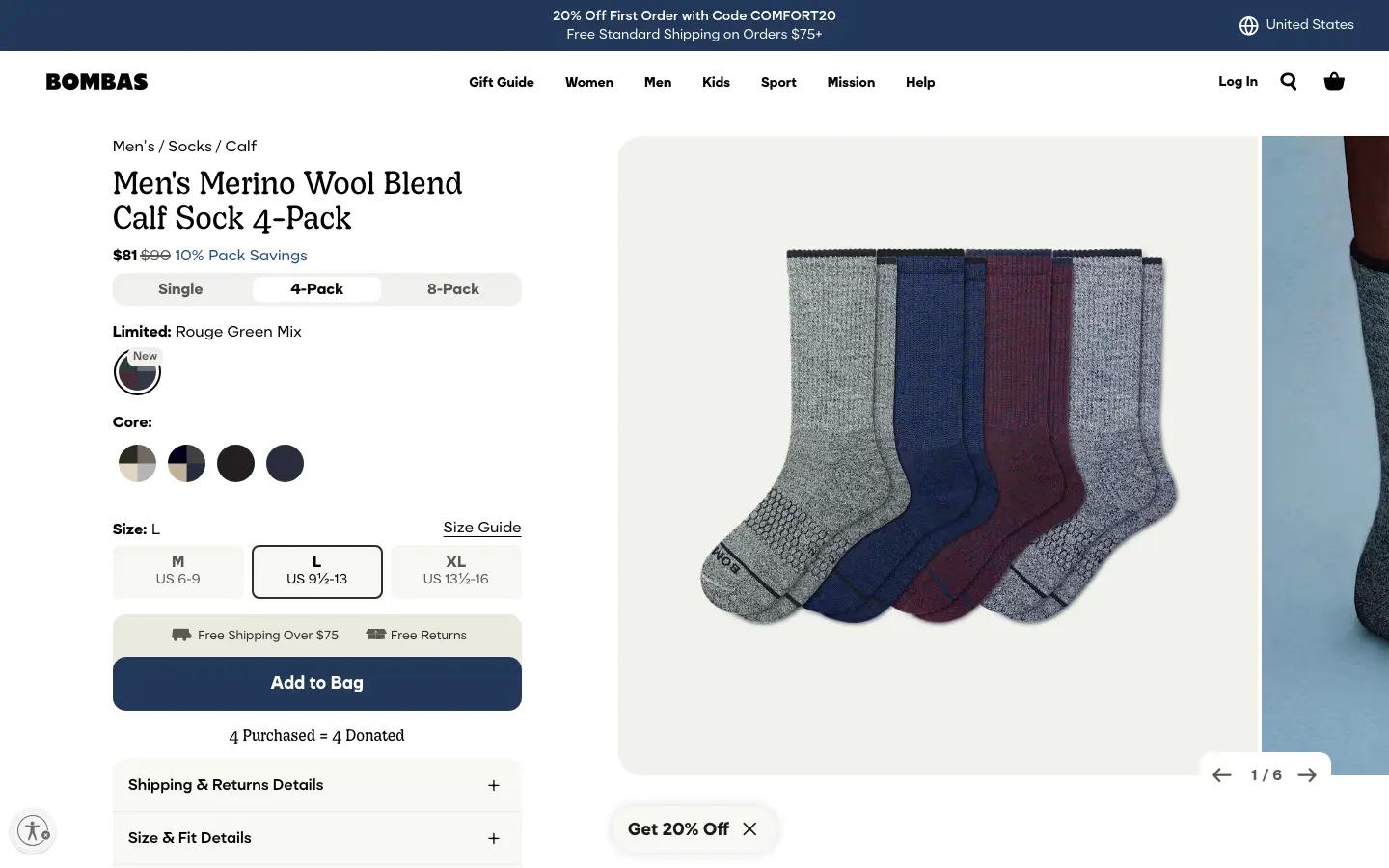
Twelve ways to get more revenue from each order, ranked by effort and likely payoff, with examples from Bombas, Brooklinen, Glossier and Allbirds.
Average order value · 6 min read
Why carts get abandoned, the three emails to send, how to capture the address first, and what the tools cost.
Conversion rate · 4 min read
New guides and price changes we spot on vendor pages.